Tesla Powershare
Energy from Your Vehicle to Your Home
Powershare turns your Tesla vehicle into a powerful source of home energy. When the grid goes down, your vehicle automatically supplies electricity to your home keeping essential systems and devices running without interruption. Beyond backup power, Powershare also enables you to charge tools, equipment and even other EVs wherever you are. Integrated with the Tesla App, you can track energy flow, monitor performance and manage usage in real time. Powershare brings a new level of independence, convenience, and control to your everyday energy use.
Is Tesla Powershare Available Across Canada?
As interest in Tesla Powershare Canada continues to grow, many homeowners ask whether the system can be installed anywhere in the country. The answer depends on several factors, including local electrical regulations, utility requirements, and the availability of compatible equipment.
While Tesla Powershare technology is designed to support home backup power through bidirectional energy transfer, provincial regulations and utility policies may differ across Canada. Some regions have already established clearer pathways for Vehicle-to-Home Canada (V2H Canada) installations, while others are still developing standards for bidirectional energy systems.
For this reason, every Tesla Powershare Installation should begin with a professional assessment to determine local eligibility, electrical compatibility, and utility requirements. Working with an experienced Tesla Powershare Installer like INTOCHARGE, ensures that your system is designed according to provincial regulations and local electrical codes while maximizing safety and long-term reliability.
Trust – Deliver by Choice NOT by Chance



Design Powershare Projects
INTOCHARGE provides expert design services for Tesla Powershare installations, customized to meet each client’s energy and backup requirements. Our certified engineering team evaluates your site, electrical layout and load distribution to ensure a ideal and code-compliant integration between your Tesla Cybertruck and home electrical infrastructure.
Tesla Powershare Installation
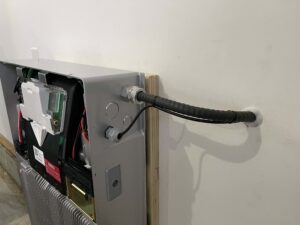
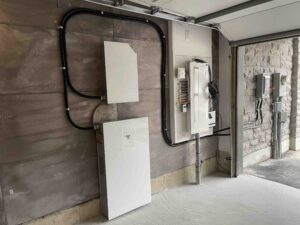
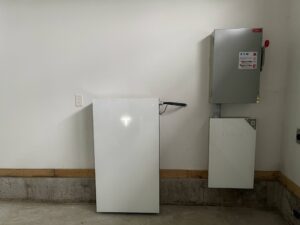
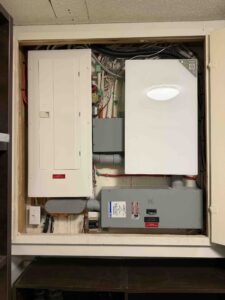
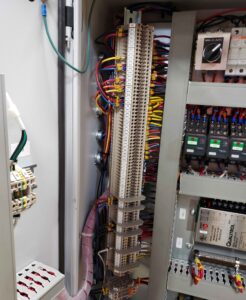
Our Tesla-certified electricians offer professional Powershare installation services to safely integrate your vehicle’s backup power capabilities into your home or business. We manage the entire process from site assessment and system configuration to ESA inspection and Hydro coordination, ensuring a smooth installation that meets both safety and performance standards.
Which Canadian Utilities Support Vehicle-to-Home (V2H)?
The adoption of Bidirectional Charging Canada is evolving rapidly, and utility companies are gradually preparing their electrical infrastructure for Vehicle-to-Home technology.
Support for V2H Canada varies depending on the local utility provider and their interconnection policies. Some utilities already have established procedures for reviewing distributed energy resources, while others evaluate projects on a case-by-case basis.
Before proceeding with a Tesla Powershare Installation, homeowners should verify:
- Local utility interconnection requirements
- Grid connection policies
- Distributed Energy Resource (DER) approval procedures
- Electrical inspection requirements
- Metering and protection standards
As, an experienced Tesla Powershare Installer, we can help homeowners navigate these requirements and coordinate with the appropriate utility provider throughout the installation process.
Manage Your Powershare with the Tesla Mobile App
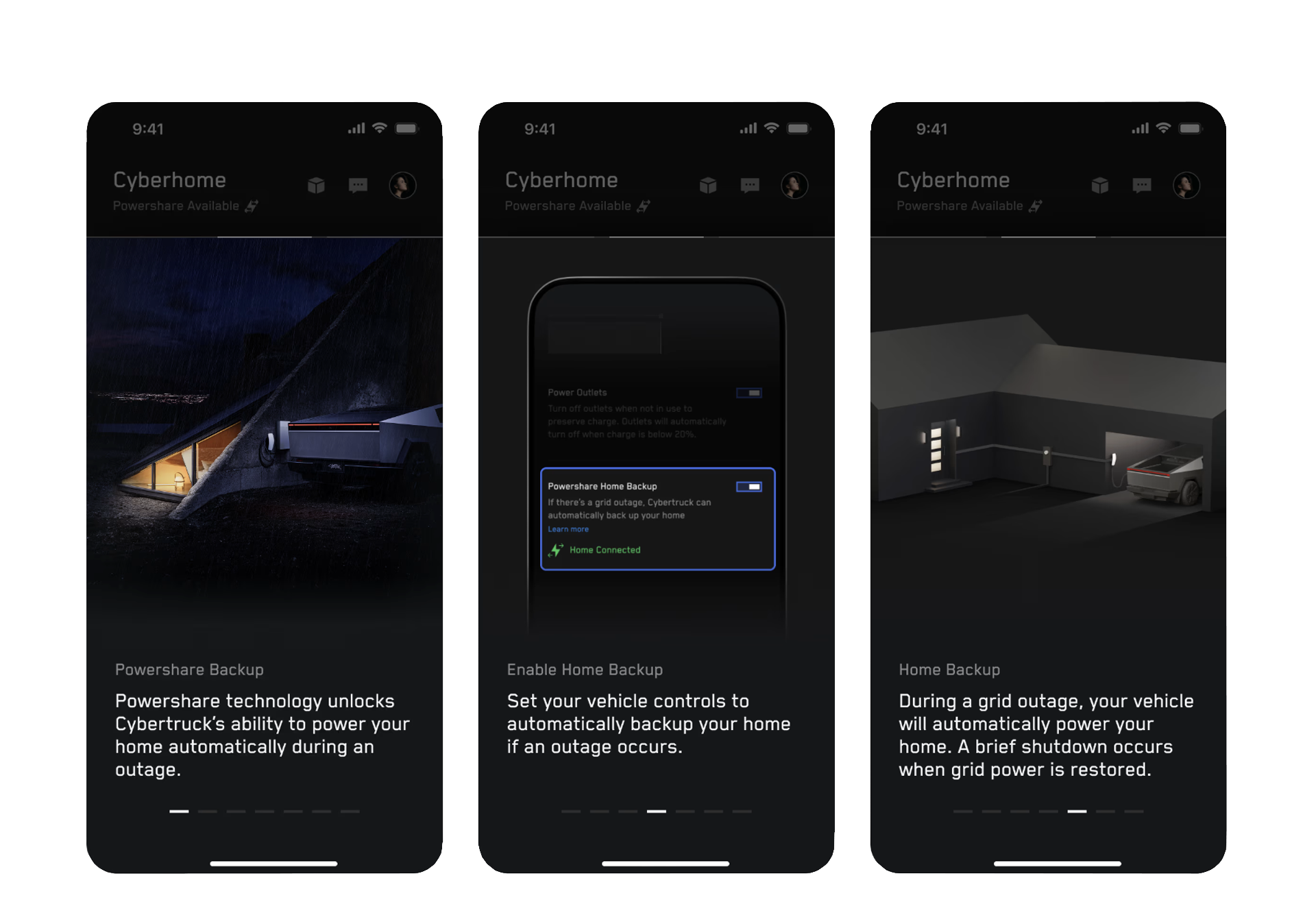
The Tesla App gives you complete control and real-time insight into your home’s energy ecosystem. From your smartphone, you can monitor energy flow between your vehicle, home and the grid, view system status during outages and manage power-sharing preferences remotely. Detailed energy graphs allow you to track usage trends over time, optimize renewable energy performance and see exactly how much your vehicle is charging from solar or the grid or discharging to power your home. All of this is available from one intuitive and intelligent dashboard.
Tesla Powershare Solution
Power Your Home
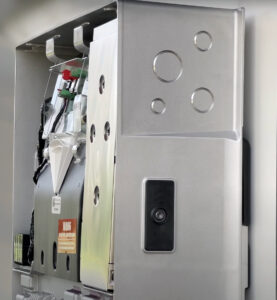
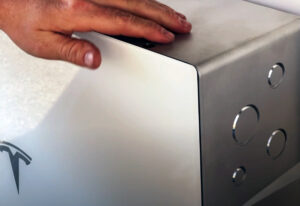
Powershare allows your Tesla Cybertruck to provide backup power to your home during an outage automatically. Once connected to a Wall Connector and Powershare Gateway, your vehicle instantly becomes a reliable source of clean, sustainable energy that keeping your lights, appliances and essentials running seamlessly.
Power Anywhere
Take the power with you. Whether you’re camping, at a job site or hosting an outdoor event, your Tesla Cybertruck can supply up to 9.6 kW of power through onboard outlets. Charge tools, run equipment or power other EVs directly from your vehicle with no external generator required.
Power the Future
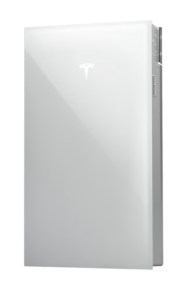
With Powershare technology, your Tesla vehicle, Powerwall and solar system work together to create a complete energy ecosystem.
Soon, over-the-air updates will enable Powerwall 2 and Powerwall 3 to integrate with your Powershare vehicle, allowing seamless vehicle-to-home and vehicle-to-grid capabilities.
Tesla Powershare vs Powerwall
Both Tesla Powershare and Tesla Powerwall provide backup energy solutions, but they serve different purposes and may even complement each other.
Tesla Powershare uses the battery already installed in a compatible Tesla vehicle to provide temporary home backup power during outages. Since the vehicle acts as the energy source, homeowners can utilize existing battery capacity without purchasing a separate stationary battery system.
Tesla Powerwall, on the other hand, is a permanently installed home battery designed to store electricity generated from the grid or solar panels. Unlike a vehicle-based system, Powerwall remains connected to the home at all times and automatically supplies backup power whenever needed.
For homeowners seeking maximum flexibility, combining Tesla Powershare with Tesla Powerwall can provide an even more resilient energy solution, allowing vehicle battery capacity and stationary storage to work together when supported by the system design.
The ideal solution depends on your energy consumption, backup power expectations, and long-term home energy goals.
Tesla Powershare vs Generator
Traditional generators have long been used for emergency backup power, but modern bidirectional charging technology offers a quieter and more sustainable alternative for many homeowners.
Unlike fuel-powered generators, Tesla Powershare uses electricity stored inside your Tesla vehicle, eliminating the need for gasoline or diesel during normal operation. This reduces noise, emissions, and ongoing fuel maintenance.
However, generators may still be suitable for situations where extended backup power is required without access to vehicle charging. When comparing the two solutions, homeowners should consider:
- Installation requirements
- Noise levels
- Fuel availability
- Environmental impact
- Maintenance requirements
- Long-term operating costs
- Integration with renewable energy systems
For many households, Home Backup Power Canada is increasingly shifting toward cleaner technologies such as Bidirectional Charging Canada, particularly when paired with renewable energy sources.
Using Tesla Powershare with Solar Panels
One of the most exciting developments in residential energy management is the ability to integrate Tesla Powershare with home solar systems.
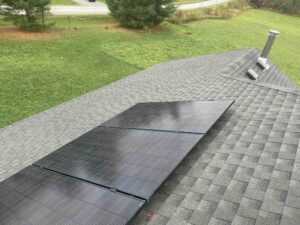
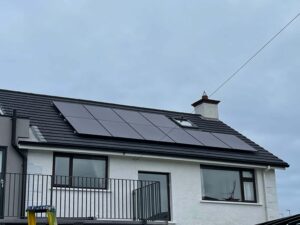
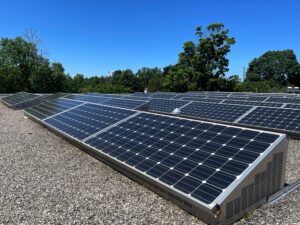
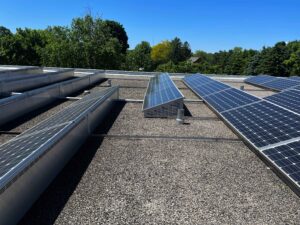
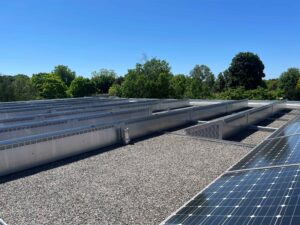
When properly designed, solar panels can generate electricity during the day while compatible energy management systems help optimize how that electricity is used throughout the home. Combining Tesla Powershare with solar technology can improve energy resilience, reduce grid dependence, and make better use of renewable energy.
Depending on the system configuration and equipment compatibility, homeowners may benefit from:
- Increased energy independence
- Better utilization of solar generation
- Reduced reliance on grid electricity
- Additional backup power during outages
- Greater flexibility for EV charging and home energy management
A professional system assessment is recommended to determine whether solar panels, home energy storage, and Tesla Powershare can work together effectively for your property.
Utility Approval & Interconnection Requirements in Canada
Every Tesla Powershare Installation should comply with local electrical regulations and utility interconnection requirements.
Although installation procedures differ between provinces and utility providers, most projects follow a similar approval process designed to ensure safe integration with the electrical grid.
Typical project requirements may include:
- Home electrical assessment
- System design review
- Utility interconnection application (where applicable)
- Electrical permit approval
- Professional installation
- Final inspection and commissioning
Because regulations continue to evolve as Vehicle-to-Home Canada technology becomes more widely adopted, homeowners should always work with qualified professionals who stay up to date with current utility policies and electrical standards.
Choosing INTOCHARGE, as an experienced Tesla Powershare Installer, helps simplify the approval process while ensuring your system is installed safely, efficiently, and in accordance with local regulations.
Why INTOCHARGE?
⇒ Licensed Electrical Contractor from Electrical Safety Authority (ESA)
⇒ Certificate of Authorization (CofA) from Professional Engineers Ontario (PEO)
⇒ Certified Master Electrician
⇒ Certified Electrician Team
⇒ EVSE Supplier
⇒ A Team of Advanced Certified Drone Pilots and Flight Reviewer
⇒ Combined Over 100 Years of Experience in the Electrical Industry
Let’s Make It Happen!
If you’re considering a Tesla Powershare or Powerwall installation to enhance your energy efficiency and backup power capabilities, we’re here to help. Our team of Tesla-certified experts is ready to guide you through the design and installation process tailored to your needs.
Frequently Asked Questions
What is Powershare?
Powershare is Tesla’s innovative technology that allows your vehicle’s battery to supply power whenever and wherever it’s needed. It can be used to energize a campsite, a tailgate event, construction tools, other electric vehicles or even your home during a power outage.
What does Powershare do and how does it work?
With Powershare, your Tesla vehicle can supply energy from its battery to power home appliances or your entire house. In the event of a power outage, Powershare automatically activates to keep your home running seamlessly. Through the Tesla app, you can track your home’s energy use and monitor outage status in real time. When you’re on the move, depending on your vehicle’s configuration, you can use Cybertruck’s built-in outlets or convert the vehicle’s charge port into a power source to take electricity wherever you go.
Which vehicles have Powershare?
Powershare is currently available for Cybertruck only. Powershare is not available for Model S, Model 3, Model X and Model Y.
What can I charge with Powershare?
With Powershare, you can supply energy to your home, electronic devices, tools, other electric vehicles and much more.
The Cybertruck All-Wheel Drive and Cyberbeast models feature a 240V outlet in the cargo bed, enabling you to charge other EVs or power heavy-duty equipment and appliances with up to 9.6 kW of output.
Can my Tesla vehicle power my home during an outage with Powershare?
During a power outage, the Cybertruck can supply backup power to your home, delivering up to 11.5 kW of output for as long as three days.
Estimate based on an average household energy use of 30 kWh per day. Actual duration may vary depending on your specific energy consumption. The 11.5 kW figure represents the system’s maximum power capacity.
What is Powershare Home Backup?
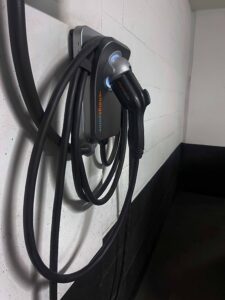
Powershare Home Backup is the system and functionality that detects power outages and enables your Cybertruck to automatically supply power to your home when connected to a Wall Connector or Universal Wall Connector. To enable Powershare Home Backup, dedicated Powershare equipment is required and sold separately. However, if you already have a Powerwall and Wall Connector installed, no additional equipment is necessary to activate this feature.
How much does Powershare cost?
Using Powershare Home Backup requires dedicated Powershare equipment and professional installation. Installation costs vary based on configuration and project complexity, typically ranging from $3,500 to $5,500 CAD. The hardware itself usually costs around $2,746 CAD, though this may be lower if you already have compatible equipment installed.
Please note that all applications involving Vehicle-to-Home (V2H), Vehicle-to-Grid (V2G) or other forms of energy generation for residential properties must be coordinated with your local Hydro utility and require a DER/CIA (Distributed Energy Resources / Connection Impact Assessment) application.
What equipment do I need for installing Powershare Home Backup?
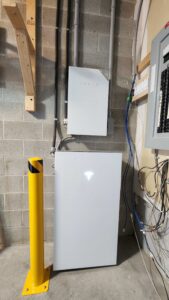
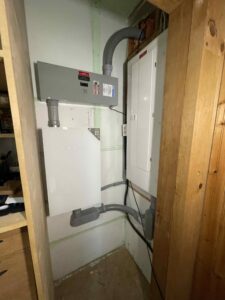
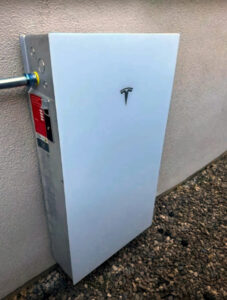
For homes without a Powerwall, a Universal Wall Connector and Powershare Gateway are required to enable Powershare Home Backup. For homes already equipped with a Powerwall and Wall Connector, no additional equipment is needed.
Powerwall 2 and Powerwall 3 will soon be compatible with Powershare-enabled vehicles to provide home backup functionality. This compatibility will be activated through an over-the-air software update.
GALLERY