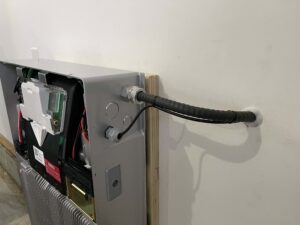
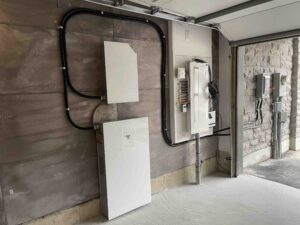
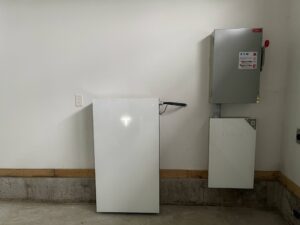
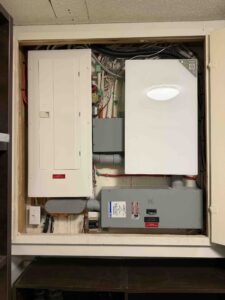
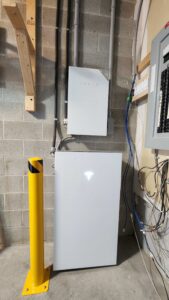
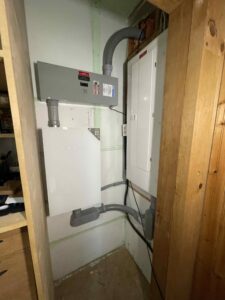
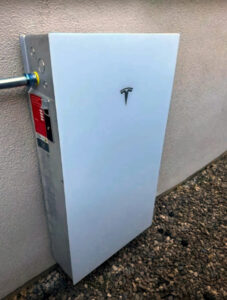
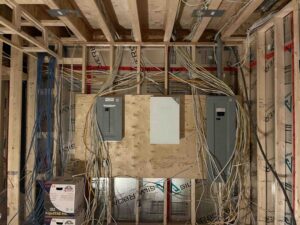
Powerwall
Your Energy, On Demand
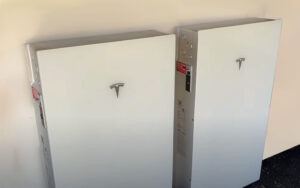
Powerwall is an advanced home battery system that stores energy generated from your solar panels or directly from the grid, providing a reliable source of backup power. This stored energy can seamlessly power your home’s appliances and devices at any time—whether it’s day or night, during grid outages, or when you prefer to go off-grid. Powerwall’s intelligent features allow you to customize settings to manage your energy consumption more effectively, helping you reduce electricity bills and achieve greater energy independence. With its ability to automatically switch to stored energy when needed, Powerwall ensures that your home remains sustainably powered and efficiently managed, giving you peace of mind and control over your energy usage
Trust – Deliver by Choice NOT by Chance



Design Powerwall Projects
INTOCHARGE offers expert design services for Tesla Powerwall projects, tailored to meet your specific energy needs. Our team, trained by Tesla, provides a customized approach that includes site assessments, load analysis, and system sizing to optimize energy efficiency and deliver reliable backup power solutions for your home or business.
Powerwall Installation
INTOCHARGE offers professional Tesla Powerwall installation services to seamlessly integrate with your existing electrical system. Our Tesla-certified electricians manage everything from site inspection to final setup, ensuring a smooth and efficient installation that optimizes your energy storage and backup power capabilities.
Is Tesla Powerwall Right for Your Home?
Not every home has the same energy needs, but for many Canadian homeowners, Tesla Powerwall can provide greater energy independence, reliable backup power, and better control over electricity costs.
Tesla Powerwall may be an excellent solution if you:
- Experience frequent power outages in your area.
- Already have solar panels or plan to install Solar at Home.
- Want to maximize the value of your renewable energy system.
- Own or plan to purchase an electric vehicle.
- Live in an area with time-of-use electricity rates.
- Want to reduce reliance on the electrical grid.
- Need uninterrupted power for essential household appliances.
- Plan to expand your home’s energy system in the future.
If you’re unsure whether Tesla Powerwall is the right fit, a professional Consultation can help evaluate your home’s electrical infrastructure, energy consumption, and future goals before moving forward with Installation.
Most Common Scenarios
Scenario 1
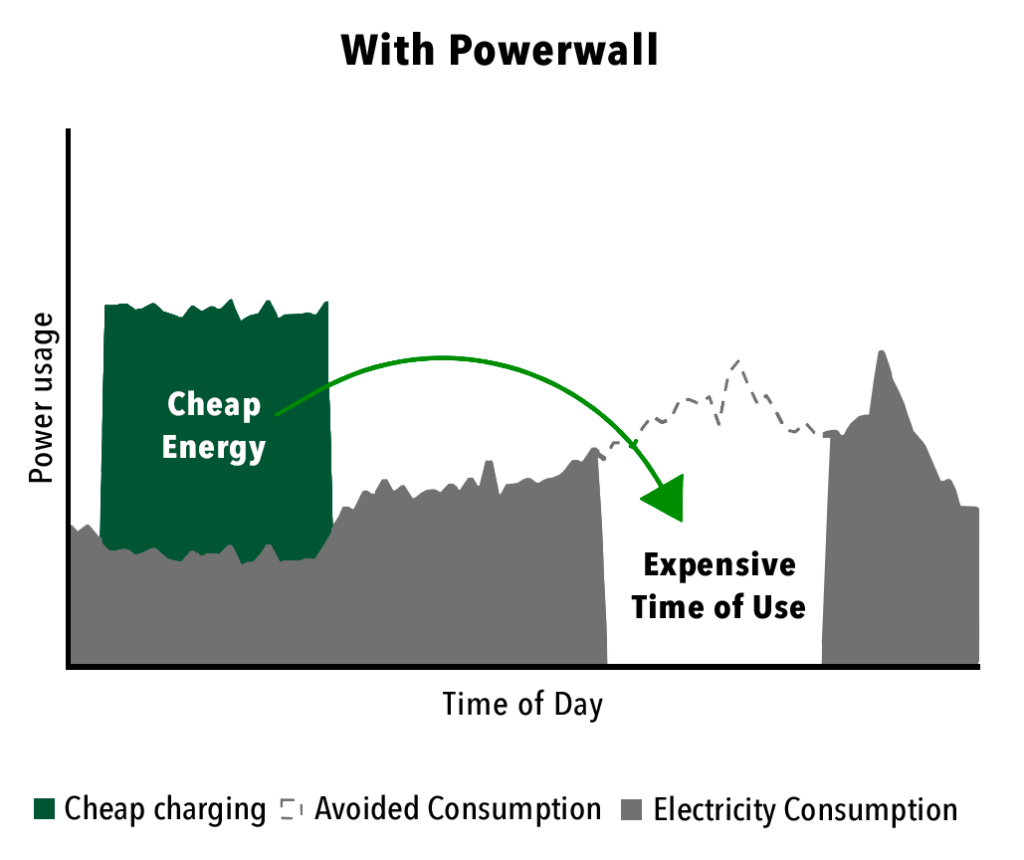
Tesla Powerwall optimizes your home’s energy usage by strategically charging and discharging based on electricity rates throughout the day. During periods when electricity rates are low, often overnight or early in the morning, the Powerwall charges by drawing inexpensive power from the grid. This stored energy is then used during peak times when electricity prices are higher, such as in the late afternoon and evening. By doing so, the Powerwall reduces the amount of costly electricity drawn from the grid, leading to significant savings on your electricity bill. This approach not only helps you manage energy costs more effectively but also ensures a reliable source of power for your home, even during periods of high demand.
Scenario 2
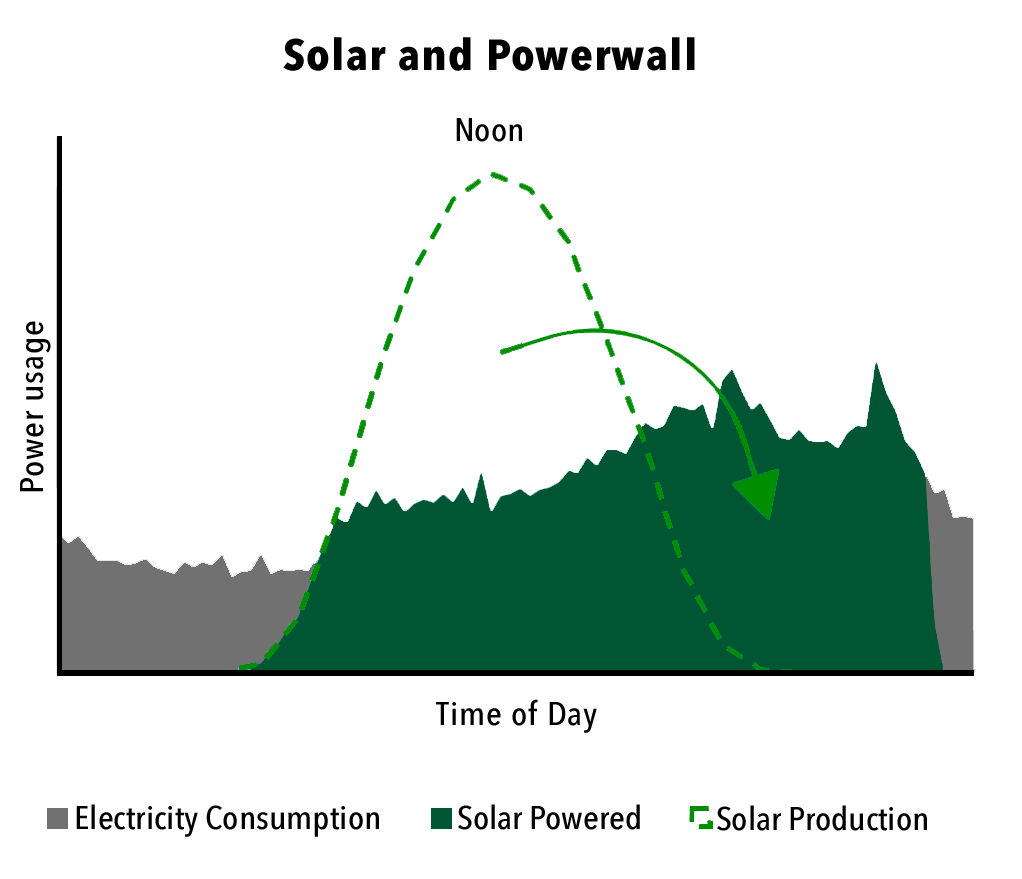
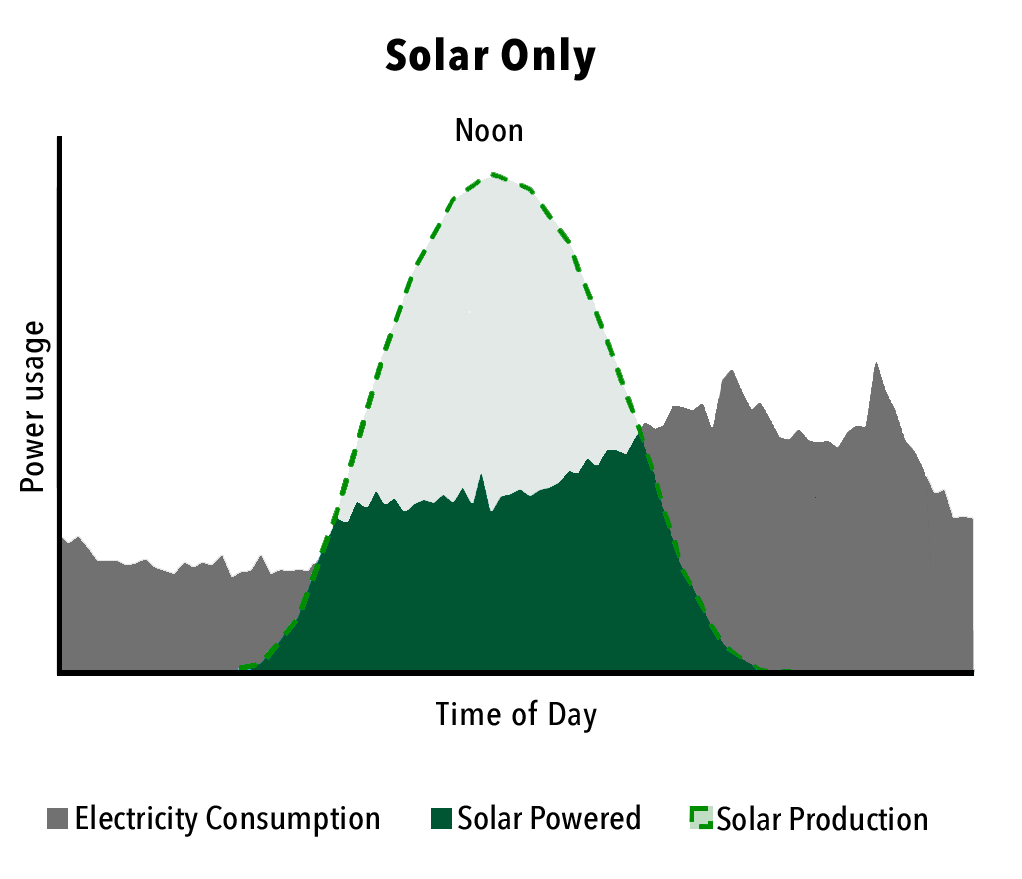
A combination of solar panels and a Powerwall system optimizes energy usage throughout the day by effectively storing and managing power. During daylight hours, especially around noon when solar production peaks, your solar panels generate more electricity than your home needs. This excess energy is stored in the Powerwall. As the day progresses and solar production decreases, the Powerwall discharges the stored energy to power your home, reducing reliance on the grid and ensuring that your energy needs are met sustainably. This process helps you maximize the use of solar energy, lower electricity costs, and provide backup power for your home.
Scenario 3
A solar-only setup works throughout the day when the sun is shining, particularly around noon, solar panels generate the most electricity. During these peak production hours, the solar panels can power your home, reducing the need for grid electricity. However, as the solar production decreases in the late afternoon and evening, shown by the decline in the green shaded area, the home must rely more on electricity from the grid to meet its energy needs. Without a Powerwall or similar storage solution, any excess solar energy generated during the day cannot be stored for later use, requiring reliance on grid electricity when solar production is low or at night. This setup optimizes daytime solar usage but lacks the ability to store energy for times when solar power is unavailable.
Tesla Powerwall + Solar Panels
Combining Tesla Powerwall with Solar is one of the most effective ways to improve home energy independence while maximizing the value of your solar investment.
During the day, excess electricity generated by your solar panels can charge the Powerwall instead of being sent directly back to the grid. When solar production decreases or electricity demand increases, the stored energy is automatically supplied to your home.
This combination allows homeowners to:
- Store excess solar energy for nighttime use.
- Reduce dependence on utility electricity.
- Increase self-consumption of renewable energy.
- Maintain backup power during outages.
- Lower electricity costs in areas with time-of-use pricing.
Whether you’re planning a new Solar at Home system or upgrading an existing installation, Powerwall and Solar work together to create a smarter and more resilient home energy solution.
As demand for Solar Battery Canada solutions continues to grow, many homeowners are choosing a Home Battery with Solar to improve energy reliability while preparing for future energy needs.
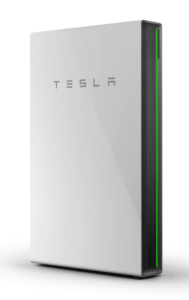
Energy Capacity
13.5 kWh
On-Grid Power
11.5 kW continuous
Backup Power
11.5 kW continuous
185 LRA motor start
Seamless backup transition
Inverter
Solar-to-grid efficiency 97.5%
6 solar inputs with
Maximum Power Point Trackers
Size and Weight
H x W x D
43.25″ x 24″ x 7.6″
287 lbs
Scalable
System expansion available anytime
40.5 kWh max addition per unit
Installation
Integrated inverter and system controller
-4°F to 122°F
Flood and dust resistance
Certification
Meets North American safety and EMI standards
Warranty
Duration
10 years
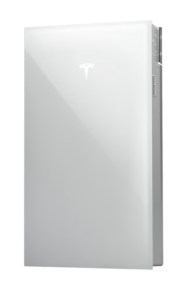
Energy Capacity
13.5 kWh
On-Grid Power
7.6 kW / 5 kW continuous
Backup Power
9.6 kW / 7 kW continuous
22kW / 10kW peak
118A LRA motor start
Seamless backup transition
Inverter
Solar-to-grid efficiency 97.5%
4 solar inputs with Maximum Power Point Trackers
Size and Weight
H x W x D
62.8″ x 29.7″ x 6.3″
343.9 lbs
Scalable
Up to 4 units
Installation
Integrated inverter and system controller
-4°F to 122°F
Water and dust resistance
Certification
Meets North American safety and EMI standards
Warranty
Duration
10 years
This Product is not available in Canada
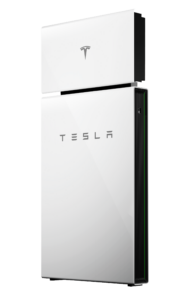
Energy Capacity
13.5 kWh
On-Grid Power
5 kW continuous
Backup Power
7 kW peak
106A LRA motor start
Seamless backup transition
Size and Weight
H x W x D
45.3″ x 29.6″ x 5.75″
251.3 lbs
Scalable
Up to 10 units
Installation
Floor or wall mounted
Indoor or outdoor
-4°F to 122°F
Water and dust resistance
Certification
Meets U.S. and international safety standards
Meets U.S. and international EMI standards
Warranty
Duration
10 years
This product has been replaced with Powerwall 3
Manage Your Powerwall Anytime with the Tesla Mobile App
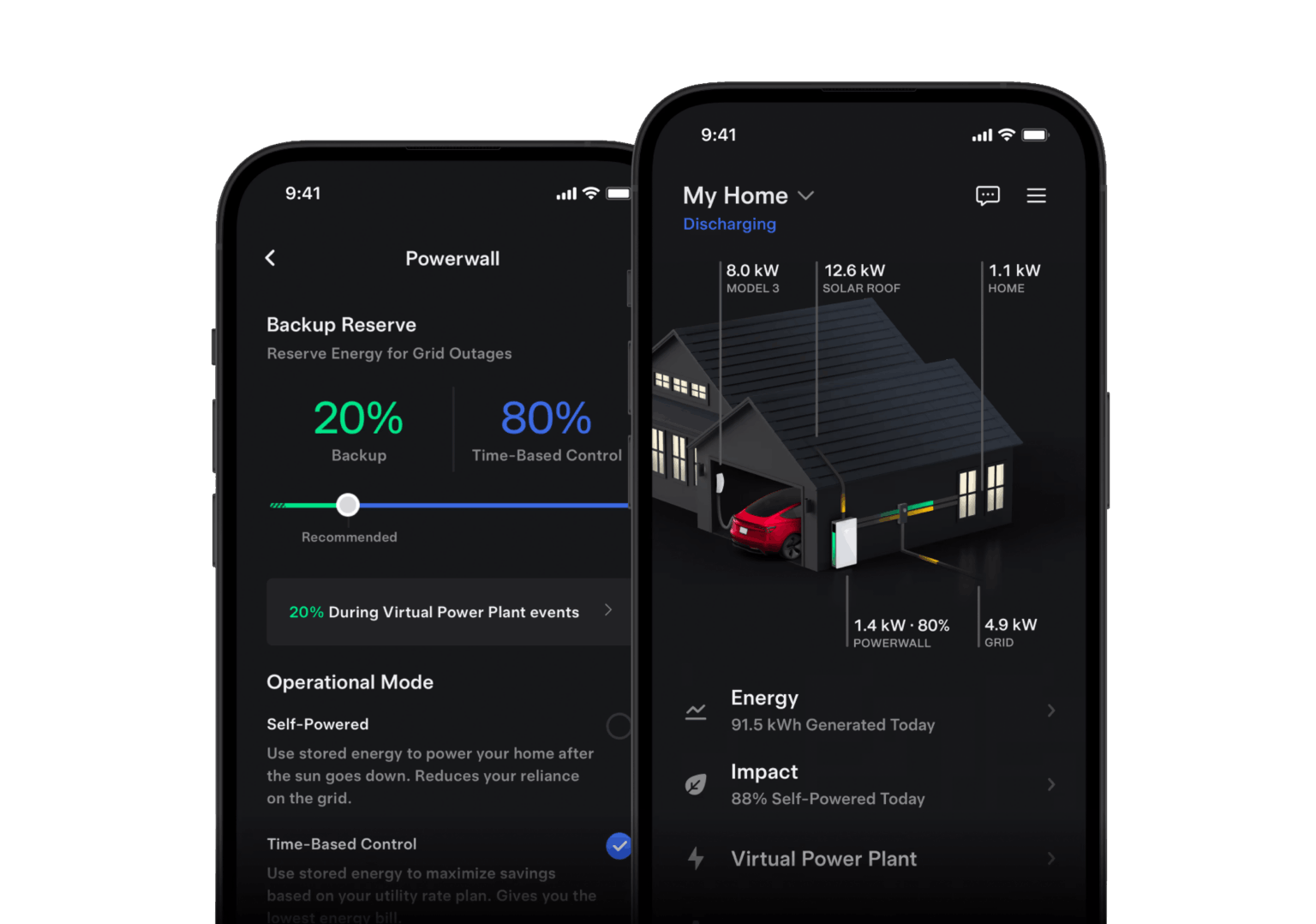
The Tesla Mobile App allows you to control your Powerwall system directly from your smartphone, offering real-time monitoring of energy production, storage, and consumption. With the app, you can customize settings to optimize energy use, such as storing solar energy for peak hours or reserving power for outages. The Time-Based Control feature helps reduce electricity costs by charging during off-peak times and discharging during peak periods.
Tailored Powerwall Solution
Store Extra Energy
When your solar system produces more energy than your home requires, Powerwall allows you to store the surplus energy for later use. Additionally, Powerwall has the capability to recharge from the grid when utility rates are low, maximizing your energy savings.
Use Energy
Your stored energy is accessible whenever you need it—whether it’s during the day, at night, or in the event of a power outage. A Powerwall system can supply power to your entire home, including essential systems like heating and air conditioning, as well as other large appliances.
Save and Earn
By analyzing your energy usage patterns, local weather forecasts, and utility price predictions, Powerwall intelligently manages your stored energy to maximize efficiency and provide power to your home, day and night. In some areas, Powerwall even allows you to generate income by selling excess energy back to the grid, offering a smart way to reduce your utility costs while contributing to the overall energy supply.
Can Powerwall Charge My EV?
Tesla Powerwall can support home EV charging by supplying stored electricity to your home’s electrical system, allowing your EV charger to operate using stored battery energy when appropriate.
While Powerwall does not connect directly to an electric vehicle, it can provide electricity to your home during outages or periods of high electricity prices, helping support EV Charging through your home’s electrical infrastructure.
When paired with residential solar panels, homeowners may even charge their vehicles using solar-generated electricity stored in the Powerwall, creating a more sustainable and cost-effective charging solution.
For households that own multiple electric vehicles or expect higher charging demand, our engineering team can recommend the most appropriate battery capacity and charging configuration during the consultation process.
Tesla Powerwall vs Generator
Choosing the right backup power solution depends on your home’s energy needs, budget, and long-term goals. While both Tesla Powerwall and traditional generators provide backup electricity, they operate very differently.
Feature | Tesla Powerwall | Traditional Generator |
Energy Source | Stored electricity | Gasoline, diesel, or natural gas |
Noise Level | Virtually silent | Moderate to high noise |
Operation | Automatic | Often requires manual startup |
Fuel Required | No | Yes |
Emissions | Zero during operation | Produces exhaust emissions |
Indoor Installation | Yes | No |
Maintenance | Minimal | Regular maintenance required |
Solar Compatibility | Fully compatible | Limited or none |
Smart Monitoring | Tesla mobile app | Varies by manufacturer |
Long-Term Operating Costs | Lower | Higher due to fuel and maintenance |
For homeowners investing in renewable energy, Tesla Powerwall offers a cleaner, quieter, and more integrated backup solution, especially when combined with Solar at Home. Traditional generators may still be suitable for certain situations, particularly where extended outages occur without access to solar generation, but many homeowners prefer battery storage for its convenience, automation, and lower ongoing maintenance.
Powerwall Installation Across Canada
INTOCHARGE provides professional Powerwall Installation Canada services for residential customers across multiple provinces.
Our experienced installation team supports projects throughout:
- Ontario
- British Columbia
- Alberta
- Saskatchewan
- Manitoba
- Quebec
- New Brunswick
- Nova Scotia
- Prince Edward Island
- Newfoundland and Labrador
Whether you’re looking for Tesla Powerwall Ontario, Tesla Powerwall BC, or Tesla Powerwall Alberta, our team understands local electrical codes, permitting requirements, utility interconnection procedures, and provincial incentive programs.
Every installation is customized to your home’s electrical system and completed according to Canadian electrical standards and Tesla installation guidelines to ensure safe, reliable, and long-term performance.
Why INTOCHARGE?
⇒ Licensed Electrical Contractor from Electrical Safety Authority (ESA)
⇒ Certificate of Authorization (CofA) from Professional Engineers Ontario (PEO)
⇒ Certified Master Electrician
⇒ Certified Electrician Team
⇒ EVSE Supplier
⇒ A Team of Advanced Certified Drone Pilots and Flight Reviewer
⇒ Combined Over 100 Years of Experience in the Electrical Industry
Let’s Make It Happen!
If you’re considering a Powerwall installation to enhance your energy efficiency and backup power capabilities, we’re here to help. Our team of Tesla-certified experts is ready to guide you through the design and installation process tailored to your needs.
Frequently Asked Questions
How does the Powerwall system work?
Whole Home Backup
- In a whole-home backup system, the main incoming service and the Powerwall (Tesla Battery) will connect to Gateway 3 which will manage the optimal power source during the day and in the event of a power outage.
- Please note that we will need to temporarily disconnect the power for full backup systems. However, only the local hydro utility has the authority to disconnect the main incoming power and this will be coordinated accordingly.
- This method does not require major modifications to your existing electrical panel in most cases, however, we would need to request a power disconnection from Hydro to modify the cables between your meter and electrical panel (we reroute the incoming power cable to the Tesla Gateway).
Advantages:
- You have the flexibility to decide which loads to keep powered during an outage.
Disadvantages
- When notified by the Tesla app that the Powerwall is supplying your system during an outage, you will need to manually turn off non-essential loads to ensure sufficient power for critical loads and prevent the battery to drain quickly.
- There are specific requirements that restrict the installation of the battery energy storage system to certain locations (The equipment shall be installed within an acceptable distance from the meter). The desired location for the Gateway will be close to the meter. This will be confirmed during the site visit and we will coordinate the final details with you before the installation.
Partial backup
- In the partial backup system, a separate electrical panel to include only the loads you wish to back up. During a power outage, the battery will supply power to these selected loads until it is fully drained. While it is called “partial backup,” the installation process can be more time-consuming and costly because some existing loads from your main electrical panel will need to be relocated to a new panel and connected to both normal power and the battery storage.
- we would require a list of all the loads you would like to include in the partial backup along with the equipment nameplate for any large equipment you wish to have covered by backup power.
Advantages
- You don’t need to manage the status of your loads during a power outage since you predefine which essential loads to back up.
Disadvantages
- The loads not connected to the backup panel, would not have power during an outage.
Can I choose either whole home backup or partial backup? What are the decision making factors?
- For whole home backup setup, as long as you are not using more power than the Powerwall circuit breaker limit, there should be no issue. If you have concerns about large loads such as elevator and furnace, you may provide us with the LRA (Locked Rotor Amps) and FLA (Full Load Amps) of those equipment to assess.
- If your concern is about backup power duration, that depends on your power consumption during an outage. If you would prefer only selected loads to be backed up, we can install a partial home backup. In this case, you would need two separate electrical panels, both would be supplied under normal conditions but during backup mode (or Powerwall usage), only the panel with selected loads would be powered.
- For whole home backup, you can receive 200A under normal conditions, however, during backup mode or Powerwall usage, your system should remain under 10 kW continuous power.
- It’s always easy to recommend going with the higher option but it’s important to consider your actual needs and your plan for using the Powerwall especially since you can always add more Powerwalls in the future (with additional cost for approvals). If you require a longer backup duration or want to store more energy during low-rate periods to use during peak-rate periods, you could add a Powerwall Expansion.
What is the output of Tesla Powerwall?
Tesla Powerwall output is 11.5kW, however, we will integrate the Tesla Powerwall with your solar system meaning the total system output to offset your loads will be set to 10kW as this is a threshold requirement from local hydro utilities. Exceeding 10kW requires CIA (Connection Impact Assessment) application with your local hydro utility. This is a costly and time-consuming process, so we typically recommend staying under the 10kW limit which is what most clients choose. If you’re looking to extend your backup duration, we can add additional Powerwall units as expansions, that means instead of one Powerwall providing 13.5kWh energy, two Powerwalls will provide 27kWh energy.
What is the cost of Tesla Powerwall installation?
The total estimated cost for your Powerwall project is typically between $19,000 to $24,000+HST. This includes all products, design and preparation of the electrical drawings, installation, coordination with the hydro utility and submission of DER application, installation of equipment (Like Gateway 3, Powerwall 3, DG disconnect switch, grounding plate and wire if needed, all necessary wiring), modification of the existing system, commissioning, and ESA inspection.
Why should I buy Tesla Powerwall?
Tesla Powerwall value proposition:
- The Powerwall is one of the most advanced and compact battery energy storage systems on the market. It offers reliable backup power, energy savings and a powerful software that allows you to manage all your Tesla products in one place.
- With a Tesla Powerwall, you will have backup power during a power outage and that is NOT the only feature it offers.
- One of the most interesting features of the Powerwall is that the system allows you to store energy during off-peak hours (when electricity rates are low) and use the Powerwall to power your home during on-peak hours (when electricity rates are high). This feature can help reduce your electricity costs over time.
- This feature is a main reason many clients choose the Powerwall as it can save money on electricity bills over time. As electricity rates continue to rise, products like the Powerwall can help people better manage their power consumption and reduce energy costs.
- Also, you can manage which power source you want to use through your Tesla app giving you full control over your energy consumption. The app allows you to monitor your usage and know when you need to reduce consumption during specific periods based on your consumption history.
- During a power outage, you’ll receive a notification through the Tesla App and you’ll need to manage your consumption to ensure it stays below 10 kW to avoid any service interruption.
- During system commissioning, we can set when your Powerwall charges and discharges and you can adjust these settings anytime through the Tesla app to maximize savings.
- The Powerwall is a super intelligent product that learns your usage patterns over time and manages power to provide you with the best possible savings. You also have the option to add more Powerwall in the future at a minimal cost as most of the work such as hydro coordination will already be completed with the first installation.
- Additional Tesla Powerwall 3 units will be able to extend the duration of backup power during power outage. You would also be able to manually turn off any non-essential loads to extend backup time for critical devices as well.
Based on Solar Panels installed, how long will it take to charge one Powerwall 3 and two Powerwall 3.
- Each Powerwall 3 has a capacity of 13.5 kWh. Depending on the solar output, it would take approximately 2-5 hours to fully charge one Powerwall and about 3-10 hours to charge two Powerwalls assuming optimal sunlight conditions.
- You can also charge your Powerwalls using a combination of hydro and solar power which can significantly reduce the overall charging time.
For maintenance concerns, is there a local technician? or how is an issue dealt with? What is the estimated turnaround time?
- For Tesla Powerwall 3, we provide remote monitoring and support for the first 3 months after installation. After that period, Tesla has a dedicated support team for any technical issues. One of the key advantages of the Tesla Powerwall is that it typically requires no maintenance, as long as no modifications are made to the unit.
- If any physical servicing is needed, you can contact our team for further assistance.
What App/software is used to monitor the energy usage and production?
You should install the Tesla app on your phone which is available in the App Store or Google Play. This app allows you to monitor energy savings, manage settings and control all energy-related features of your Tesla system.
Where would be the best location to install Tesla Powerwall?
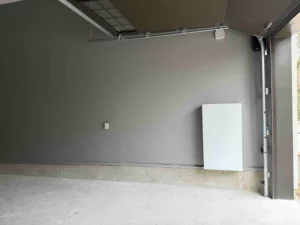
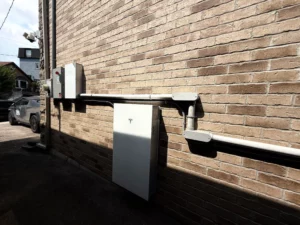
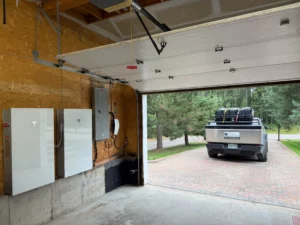
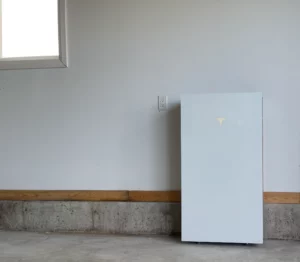
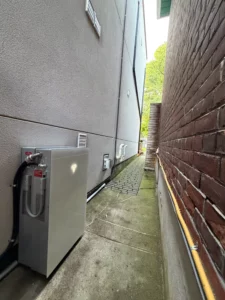
- The best location for a Powerwall is typically the garage. If you don’t have a garage or you prefer to install it on an exterior wall, we would need to consider winter temperature effects and ensure the installation site has sufficient clearance from other objects such as gas lines. The alternative location would be in the basement that requires assessment to ensure compliance with Ontario Electrical Safety Code (OESC). The basement shall have a 1-hour fire-rating with Type X drywall or building a customized fire-rated cabinet would be required. This would be an additional project cost.
- The enclosure rating for both the Powerwall and Gateway 3 is NEMA 3R with an operating temperature range of –20°C to 50°C (–4°F to 122°F), making them suitable for both indoor and outdoor installations.
Is there any additional considerations for installing Tesla Powerwall?
In some cases, we are required to install a bollard in front of or beside the Powerwall to prevent it from being accidentally hit by a vehicle. However, if there is a curb or side wall that provides sufficient mechanical protection, this requirement may be waived.
Is a separate Automatic/Manual transfer switch required?
No, the Automatic Transfer Switch (ATS) will be the Tesla Gateway 3.
If I’m not interested in solar panels, can I still get Tesla Powerwall?
- Combining solar panels with the Powerwall can significantly reduce your electricity costs. The Powerwall is a highly intelligent device that optimizes energy usage by selecting the most cost-effective energy source available at any given time.
- If you feel that solar is not a good fit for your application at this time, we can still proceed with installing a Tesla Powerwall. However, you would not be qualified for the incentives from Home Renovation Saving Program. Should you decide to add solar panels in the future, we can provide the solar installation at that time.
Could solar panels be mounted on all directions (East/West/South/North roofs)?
- We consider tree coverage and surrounding buildings, otherwise, the power generation from solar panels would be very minimal, making solar an ineffective option for your home.
- In general, south and southwest-facing panels provide the best solar power generation. Installing panels on other directions may or may not be cost-effective. This will be determined during assessment.
Does the type of roof have any impact on installation pricing?
- Installing solar on a metal/steel roof generally costs more than on standard asphalt shingles, mainly due to the specialized racking and attachment systems as well as sealing requirements.
- Installing solar on a flat roof generally costs more than on angled roof because solar panels can be directly mounted on an angled roof, however, we need to install racking systems before mounting the solar panels on a flat roof.
What is the return on investment for solar panel installation?
It’s important to note that solar installation benefits are realized over the long term, typically around 10 years, making it less suitable for short-term investors.
What are the costs associated with a solar panel project?
In addition to installation labour, solar PV material, inverters, and mounting system, some other associated costs are permits, inspection, and hydro coordination.
What Manufacturer/Make/Model of Solar Panels do you use?
We mainly use either Longi or Thornova (450-500W models for residential applications), however, we work with you if you have any specific brand in mind.
What is the warranty (manufacturer and labour) for Solar Panels?
25 years for solar panels, 2 years labour.
What Manufacturer/Make/Model of microinverter do you use?
We consider DC-coupling with Tesla Powerwall for most project, so Tesla MCIs will be used. We use Tesla-compatible devices to ensure seamless integration of the Tesla Powerwall with your solar energy system, so there are no compatibility concerns. If it is an AC-coupled system, we would use microinverters such as APsystems or Enphase.
What is the warranty (manufacturer and labour) for microinverters?
10 year microinverter and Tesla Powerwall, 2 year labour.
Would there be enough solar power to charge electric vehicle?
Tesla Powerwall can be AC or DC-coupled with solar panels and we can integrate your EV charging station with Tesla Powerwall(s). However, the EV battery is quite large and the Powerwall’s capacity is significantly smaller than your EV battery. Therefore, with most residential setups, using Tesla Powerwall to charge your EV is not recommended as it would take a long time to charge your EV using solar power alone and also it would quickly deplete the stored energy. You should consider programming the EV to charge at night from grid at low electricity rate.
Does the installation cost include Tesla Charger? If we install alternative car charger, not Tesla Charger, would the system be compatible?
The charging station installation cost can vary from $800 to $2,500 depending on the complexity of the project (this does not include any ground excavation). You can install different types of EV charging stations without any issues, however, if you’re considering the Tesla Powerwall and Gateway, the charging station we recommend is the Tesla Universal Wall Connector which is compatible with both Tesla charging ports and J1772 ports (for non-Tesla EVs). This way, you can manage everything through a single app otherwise, you would need a separate app for your EV charging station.
Would you help with filing necessary paperwork for government rebate/incentives?
Yes, we assist our clients with all necessary paperwork required to apply for government rebates/incentives that may be available for your application. Please note that for some specific rebates such as Home Renovation Savings Program, incentives are only available when solar panels are part of the project.
Is net metering available for my address?
- In most areas, utilities only accept net metering applications if solar panels are installed. Utilities do not usually allow net metering for battery-only systems as they require that the energy being sold back to the grid is generated from clean energy sources, rather than energy that was previously purchased from them. A preliminary consultation with local hydro utility is required to confirm available capacity for any new connections.
- With Net Metering Program, you can sell any extra power generated by solar back to hydro utility which means you pay less for your electricity costs by receiving credits on your electricity bill for any surplus energy produced.
- Please note that applying for Net Metering makes you disqualified for Home Renovation Savings Program.
What incentives are available?
- For the incentives, you can utilize Home Renovation Savings program that offers up to $5,000 for a solar project and $4,050 for one Tesla Powerwall (a total of $9,050) or $5,000 for two or more Tesla Powerwall. You can benefit from this program for your primary house, rental property, and your cottage. You may apply for the Home Renovation Savings Program and then we can obtain approval on the application once we receive your participant ID.
- If you have a corporation registered under the same address as your house, you may be eligible Clean Technology Investment Tax Credit (Refundable Tax Credit), you may discuss that with your accountant.
- You may also utilize City of Toronto Home Energy Loan Program, however, you need to be aware of the interest for paying back the loan.
- As interest in green and sustainable energy grows, these incentives are being reduced as the government sees more people moving toward green energy on their own and doesn’t need to incentivize the home owners.
Do I need to upgrade my service to 200 Amp? Would you help with any necessary electrical permits, application, etc.?
- We can assess and advise you on the panel upgrade requirements. Coordination with local hydro utility is required to determine if the current infrastructure can support the upgrade. For projects that require panel upgrade, if the hydro infrastructure is already prepared for a 200A service, there will be an application fee for the disconnection request which allows us to safely disconnect the service and proceed with the panel upgrade. However, if the infrastructure is not ready for 200A, the utility provider will need to upgrade their service and cables accordingly. The exact service fee will be determined once we submit the application, and they begin their assessment.
- For Distributed Energy Resources (Solar/battery), there are two separate applications with the utility. Hydro will advise on the applicable fees once they receive the request on the application.
GALLERY